
Everything I Got Wrong About Substack and Writing Online
Lessons from 500 posts you’re never going to hear from any online guru

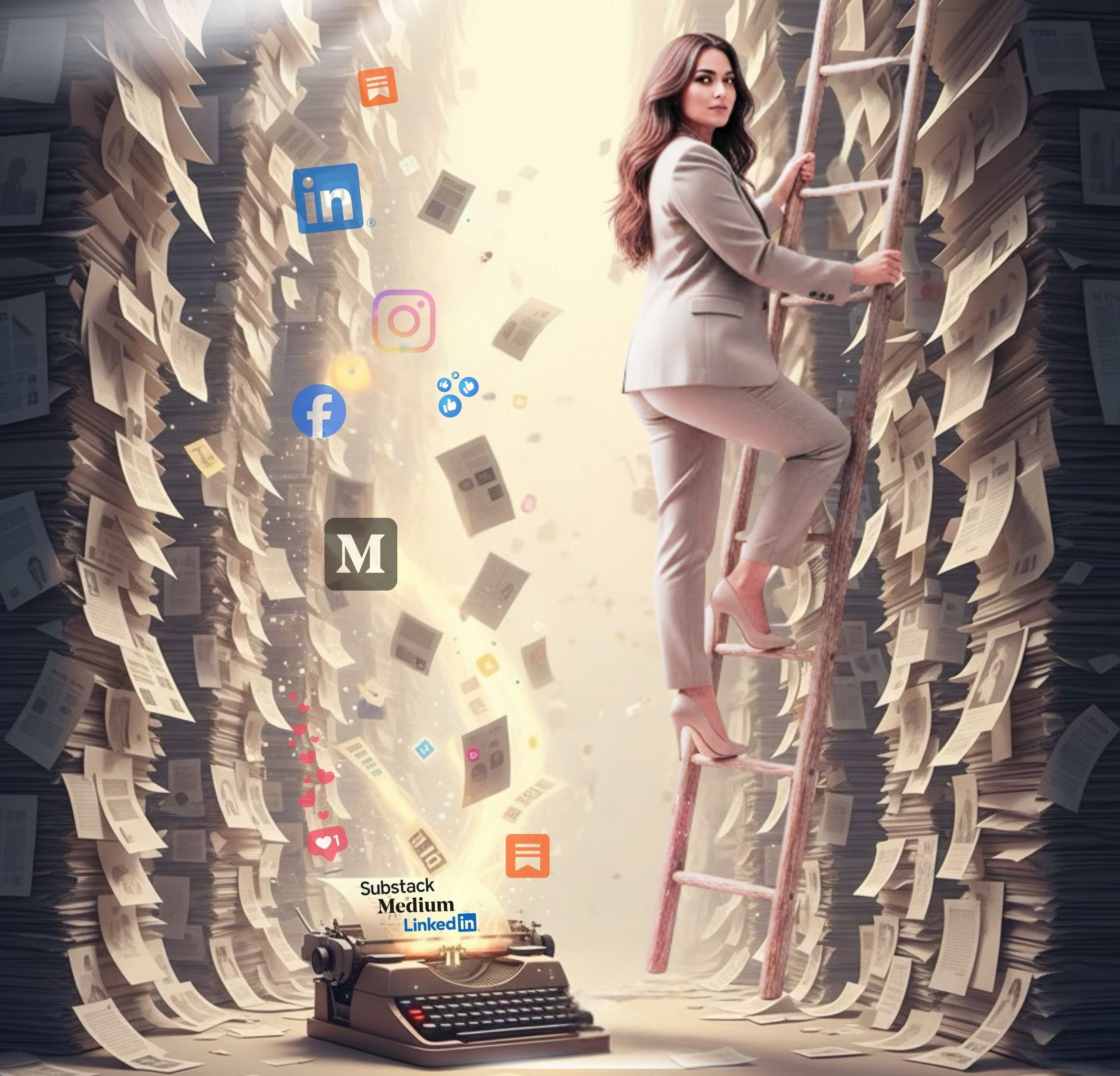
I write about leadership, education, AI, and why teaching critical thinking about it is more important than ever.
Please hit the heart ❤️, restack 🔄, subscribe 📨, and all that jazz to help spread the word!
🙌
Since birthdays are no longer confined to one day a year, and some people actually stretch them into an entire month, I’m going to call this my Substack-aversary Week. To honor this, get ready for some truth talk none of the growth gurus want you to know.
And this comes from writing online for three years on multiple platforms with over 500 posts under my belt. So I have learned a little somethin somethin about reader behavior online and the algos, the ever mysterious, frustrating as hell algorithms.
The work you care least about
This is the part of the lesson no one expects or teaches and would never dare utter out loud. Because the truth is, you can’t predict or control these algorithms, especially given how they swing so completely in different directions throughout the year. And this is evidenced from Medium and LinkedIn in particular, where literally overnight, people that were receiving massive reach lost it all without warning.
If you think you can control and perform what does best forever, at some point you’re going to be in for a rude awakening.
Having said that, some of my best performing pieces weren’t the ones that I spent hours toiling over. They were the ones I tossed off and barely cared about or hesitated to publish at all. I had an em dash post on LinkedIn go completely viral. Just a little rant I had written after reading article after article in my publication where every submission was peppered with em dashes throughout the entire thing.
And then there was the one I almost didn’t publish because I thought it made me look bad. It was about the best boss I ever had, who happened to be at a fast food job from my early college days. I didn’t want to admit I haven’t had a great boss that good since. And honestly, I thought people would judge me for it.
That Coffee Pot Leadership piece ended up making me the most money I ever made on Medium. It was picked up by Your Tango and republished, and did well here on Substack. So well, in fact that a big influencer with a massive following on LinkedIn stole the entire concept and turned it into a four-part series, including the visual concept, without giving me an ounce of credit.
The moral: you don’t really get to decide what has reach and impact. All you can do is write what feels good and publish it even when you’re unsure, especially when you’re unsure.
Which brings us next to the ever sought after game of visibility
The invisible metrics problem
The biggest lie ever sold online is that visible engagement equals success. I am here to tell you for a fact, it does not. What happens behind the scenes doesn’t always play out with the engagement that you see on the front lines. I’ve had posts with barely any comments that reached way beyond my usual audience. Some of them went somewhat viral. I’ve also had pieces that looked mega successful from the outside, but didn’t reach much beyond that.
Platforms give you a teeny tiny window into performance, and people mistake that for the whole house. Most of what truly matters is invisible to everyone but YOU. This included the returning readers, where people drop off, how long they stay, and who actually comes back week after week. The surface numbers only tell you who clicked a button, but they don’t tell you who shows up behind the scenes.
So don’t get stuck on metrics.
The algorithm mismatch problem
It’s hard to read writing advice online and not find some form of content repurposing as a strategy, and most people think that just means taking it from one place and dumping it on another platform. Sounds easy enough, right? Well, that’s not repurposing. It’s recycling, and I have learned that every platform has its own pace, culture, tone, attention span, and what the mighty algorithm deems important to push out to its particular readers.
I took my chatbot marriage post that went viral on LinkedIn and published it on Medium where it completely bombed. I’ve had similar experiences with other pieces as well.
You can’t just take pieces and interchange them like swapping sweaters across three different climates and expecting them to all feel the same. One is going to fit. One is going to itch. One is going to make you wonder why you ever liked it in the first place.
When influencers tell you to repurpose content, they’re leaving out a very, very key part that you have to actually rewrite it to fit the platform.
If you haven’t decided that you hate me yet for being too honest, keep reading.
The Echo Chamber
Every platform has groups of people who interact with the same circle of writers over and over again. LinkedIn has been notorious for these pods. Apparently, with their new changes, that is supposed to get penalized a bit more now. What ends up happening with those types of circles is that they feel supportive, but none of them are engaging with any of your ideas. And the worst part is it starts to distort your feed.
Because soon you’re seeing the same names everywhere and that same small audience that you never actually meant to target in the first place.
Before you know it, your work is no longer circulating where it needs to go.
Engagement loops give you quick reactions, reassurance, and usually a quick bump in reach. But here’s the caveat. They train the algorithm to associate you with the wrong community. And in doing so, they limit who actually sees your work. The worst part is that once you get into them, they are very hard to break out of, especially if they are aggressive with their networking.
Writers don’t even realize they’re shrinking their visibility by trying to increase it by interacting in these echo chambers. Can you grow in these? Yes, you can. But generally, they aren’t people who are going to actually read your content. And of course, no growth coach selling their services to help you do exactly that is going to ever tell you any of this.
Now, many of you probably think, well, that’s LinkedIn. We don’t have this going on here within Substack. Well, they’re here too. They just look a little different.
My advice to you would be, the next time you go to reshare someone’s work, ask yourself: am I doing this because I really believe it’s valuable and enriches somebody’s life by me sharing it and supporting it, or am I doing it because I like this person, they always read my stuff and reshare it, so I feel obligated to do the same.
If your response is the latter, well, I think you already know the answer.
The part everyone learns the hard way
So what do you do instead? You write, keep showing up, and you do the work anyway, because writing online is a fucking grind, and anyone who tells you otherwise is trying to sell you something. This is the part that no one wants to hear, because it’s not glamorous, it kind of sucks, and it doesn’t fit neatly into a carousel on LinkedIn or a bullet point list about doubling your engagement.
The truth is that consistency is more essential than some crazy strategy to game the system. Attention spans are short, algorithms are mass chaos, and people are unpredictable.
What actually works is writing what you care about week after week, even when it feels like it’s not landing.
What works is developing your voice, learning from things that flop, and what takes off when someone finally finds you and sticks around.
What works is reading other writers who make you think, not just make you feel something or want to reshare it because they reshare you.
What works is accepting that this is a long game, not a sprint. And that there really are no easy shortcuts.
You write, you refine, you adjust, you get better, and you keep doing it even when it doesn’t look like anyone really cares. And if you’re still here after a year or two or three, you’re already doing something most people can’t sustain.
The last thing I will tell you is that you need to be honest with yourself about what you want from whatever platform you’re on. If your goal is to make money, you have to sell something that people on that platform want. Otherwise, you’re not in the right place.
Not everybody is on a platform to generate an income. A lot of people use social media as funnels. They use it to show their breadth and depth and body of work. It’s a portfolio.
Some people are here strictly for the attention, the influence, and their writing reflects that.
At the end of the day you can succeed online, but only if you understand what you’re doing here and what the platform is built for. Because if you’re trying to make $$$ or sell something that doesn’t align with the audience, you’re going to be disappointed.
Thank you - very helpful for a Substack noob. (And one who sucks generally at this sort of thing.)
I always wonder about then tension - write about what people care about or what they SHOULD care about. Write stuff that resonates (tickles their confirmation biases) or shakes them up?
Such great wisdom and advice Bette - thank you!!